
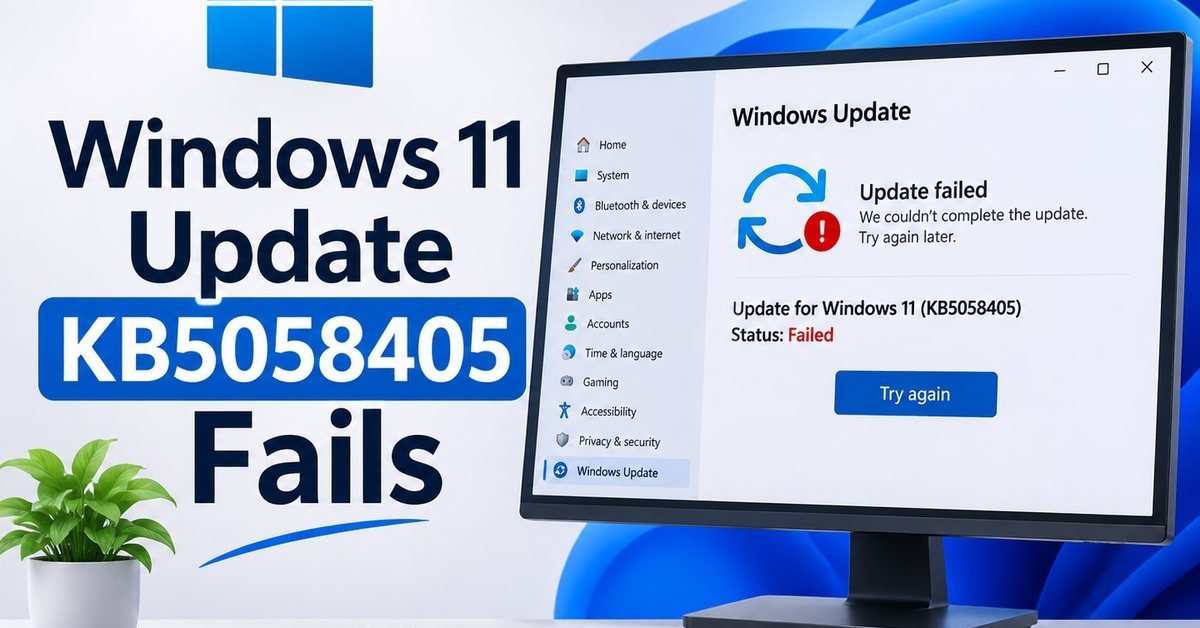
Windows 11 Update KB5058405 Fails? 7 Ways To Fix It
If the Windows 11 Update KB5058405 Fails to install, you may see an installation error, a download that gets stuck, or a message saying Windows couldn’t complete the update. These problems can occur because of corrupted update files, insufficient disk space, damaged system components, or Windows Update service issues.
Windows 11 Update KB5058405 Fails is a May 13, 2025, security update released for Windows 11 versions 22H2 and 23H2. Microsoft also documented a separate recovery issue involving ACPI.sys and error 0xc0000098 on certain devices, particularly virtual machines.
The good news is that you can investigate most Windows Update installation problems using built-in troubleshooting tools. This guide explains what to check, how to repair common update problems, and what to do if your computer cannot start after Windows 11 Update KB5058405 Fails.
ALSO READ: Driver Manager: What It Is And How To Use It On Windows
Why Does Windows 11 Update KB5058405 Fails?
There isn’t one universal reason why Windows 11 Update KB5058405 Fails. The cause depends on the error message, Windows version, and condition of your system.
Here are some common reasons an update may not install:
- Corrupted update files: Previously downloaded installation files may be incomplete or damaged.
- Insufficient storage: Windows may not have enough free space to prepare and install the update.
- Damaged system files: Missing or corrupted Windows components can interrupt the installation process.
- Windows Update service problems: Required background services may not be running correctly.
- Driver compatibility issues: Certain outdated or incompatible drivers can interfere with Windows updates.
- Interrupted downloads: An unstable internet connection or unexpected shutdown can prevent installation from completing.
Before trying the solutions below, check your Windows version and write down the error code shown in Update History. This information can help you identify the actual cause instead of trying random fixes.
Run The Windows Update Troubleshooter
The Windows Update troubleshooter is a good starting point when Windows 11 Update KB5058405 Fails refuses to install. It checks common update-related problems and may automatically repair certain issues.
Follow these steps:
- Press Windows + I to open Settings.
- Select System from the left sidebar.
- Click Troubleshoot.
- Select Other troubleshooters.
- Find Windows Update.
- Click Run.
- Follow the instructions displayed on your screen.
- Restart your computer after troubleshooting finishes.
Once your computer restarts, open Settings and select Windows Update. Check whether the update is still offered and whether the installation problem has been resolved.
If the troubleshooter identifies an issue but cannot repair it, continue with the next solution.
Clear The Windows Update Cache
Damaged or incomplete files in the Windows Update cache can prevent an update from downloading or installing properly.
You can clear the temporary update files without reinstalling Windows.
Stop the Windows Update Service
- Press Windows + R.
- Type
services.mscand press Enter. - Find Windows Update in the services list.
- Right-click it and select Stop.
Remove Temporary Update Files
- Open File Explorer.
- Navigate to
C:\Windows\SoftwareDistribution. - Open the Download folder.
- Delete the files and folders inside it.
- Return to the Services window.
- Right-click Windows Update and select Start.
Restart your computer and check for updates again.
Important: Delete the contents of the Download folder, not the entire Windows or SoftwareDistribution directory. Windows can download fresh update files when needed.
Repair Corrupted Windows System Files
Windows 11 relies on system files and components to install cumulative updates. If these files become damaged, installation problems may occur.
Microsoft provides two built-in tools that can help repair Windows:
- Deployment Image Servicing and Management (DISM)
- System File Checker (SFC)
Follow these steps:
- Right-click the Start button.
- Select Terminal (Admin) or Command Prompt (Admin).
- Run this command:
DISM /Online /Cleanup-Image /RestoreHealth
- Wait for the operation to finish.
- Next, run:
sfc /scannow
- Allow the scan to complete.
- Restart your computer.
DISM checks and repairs the Windows component store, while SFC scans protected system files and attempts to repair corrupted versions.
After restarting, open Windows Update and check whether the installation problem continues.
Make Sure Your PC Has Enough Free Storage
A Windows update may fail if your system drive doesn’t have enough available storage.
Even when the update downloads successfully, Windows may need additional temporary space to unpack files and complete installation.
To check your available storage:
- Press Windows + I.
- Select System.
- Click Storage.
- Check the available space on your Windows drive.
- Remove unnecessary temporary files if storage is running low.
You can also use Storage Sense to clean up temporary files.
To enable it:
- Open Settings.
- Select System > Storage.
- Turn on Storage Sense.
- Open Temporary files.
- Review the available cleanup options.
- Select the files you no longer need and remove them.
Avoid deleting personal documents or files you don’t recognize.
Once you have enough free space, restart your PC and try Windows Update again.
Check Windows Update Services
Windows Update depends on background services to download, prepare, and install updates. If a required service is disabled or not running correctly, the installation may fail.
To check the Windows Update service:
- Press Windows + R.
- Type
services.mscand press Enter. - Find Windows Update.
- Double-click the service.
- Check its startup configuration and current status.
- Start the service if it is stopped and can be started manually.
Also check the Background Intelligent Transfer Service (BITS), which helps Windows download files in the background.
After checking the services, restart your computer and try checking for updates again.
Don’t change unrelated service settings or disable Windows security services as a troubleshooting shortcut.
Download The Update Through Microsoft Update Catalog
If Windows Update continues to experience download problems, you can check whether a standalone package is available through the Microsoft Update Catalog.
However, there is an important detail about Windows 11 Update KB5058405 Fails: it is an older May 2025 security update. In November 2026, your computer may already have a newer cumulative update that includes its previous improvements.
Before downloading anything:
- Press Windows + R.
- Type
winverand press Enter. - Check your Windows version.
- Open Windows Update and review your update history.
- Confirm whether Windows 11 Update KB5058405 Fails is already installed or superseded by a newer update.
If you specifically need the standalone package, search for Windows 11 Update KB5058405 Fails in the Microsoft Update Catalog.
Make sure the package matches your Windows version and system architecture.
Don’t force-install an outdated cumulative update when a newer supported update is already available.
Fix The ACPI.sys Error 0xc0000098
One important issue associated with Windows 11 Update KB5058405 Fails is the recovery error 0xc0000098.
Some affected devices displayed a message similar to:
- Your PC/device needs to be repaired.
- The operating system couldn’t be loaded because a required file is missing or contains errors.
- File: ACPI.sys
- Error code: 0xc0000098
Microsoft documented this problem primarily on virtual environments, including Azure Virtual Machines, Azure Virtual Desktop, and virtual machines hosted on Citrix or Hyper-V.
Home users running Windows 11 Home or Pro are less likely to encounter this particular issue.
Microsoft states that the problem was addressed by the out-of-band update KB5062170.
If your computer is affected, don’t repeatedly force the update or attempt random boot repairs. Use Windows Recovery Environment or the appropriate recovery procedure for your virtual machine. After recovering the system, follow Microsoft’s guidance for installing the corrective update.
This issue is different from a normal Windows Update download or installation failure, so the repair method also differs.
What If Windows 11 Update KB5058405 Fails Won’t Install?
If you’ve tried the troubleshooting methods above and the update still fails, check the exact error code in Windows Update history.
Go to:
Settings > Windows Update > Update history
Find the failed installation and note its error code.
Here are some common Windows Update error codes and what they may indicate:
| Error code | Possible cause |
|---|---|
| 0x8007000d | Damaged update files or cache |
| 0x800705b4 | Installation timeout |
| 0x800f0922 | Update or system partition problem |
| 0x80070002 | Missing update files |
| 0x80070005 | Access or permission issue |
| 0xC1900101 | Driver compatibility problem |
The exact meaning can depend on the installation context. Use the error code to choose the appropriate repair rather than applying every fix at once.
If the problem remains, consider performing an in-place repair installation using supported Windows installation media. Back up your important files first and carefully review the installation options to preserve your data.
Final Thoughts
When Windows 11 update KB5058405 fails, the first step is to identify whether you’re dealing with a download problem, an installation error, or a recovery issue after installation.
Start with the Windows Update troubleshooter, clear damaged temporary update files, repair system components, and check available storage. If you encounter the ACPI.sys error 0xc0000098, remember that Microsoft documented a specific issue affecting certain virtual environments.
Most importantly, check your current Windows version and update history before manually installing an older package. This helps you avoid unnecessary installations and focus on the solution that actually matches your problem.
FAQs
Why does Windows 11 update KB5058405 fail to install?
KB5058405 may fail because of corrupted update files, insufficient storage, damaged Windows components, or service-related problems. The exact cause depends on the error code and system configuration.
Which Windows versions are affected by KB5058405?
Microsoft released KB5058405 for Windows 11 version 22H2 and version 23H2. The update included security and quality improvements.
What does error 0xc0000098 mean after KB5058405?
Error 0xc0000098 can indicate a Windows recovery problem involving a missing or damaged boot-related file. Microsoft documented an issue involving ACPI.sys on certain devices after the May 2025 update.
Can I manually install KB5058405?
You can check for its standalone package in the Microsoft Update Catalog. However, because KB5058405 is an older cumulative update, first verify whether a newer update has already replaced it.
ALSO READ: Sawgrass Printer Driver MacOS – Download & Install
Pingback: Windows Update Stuck On 0? How To Fix It In Windows 11