
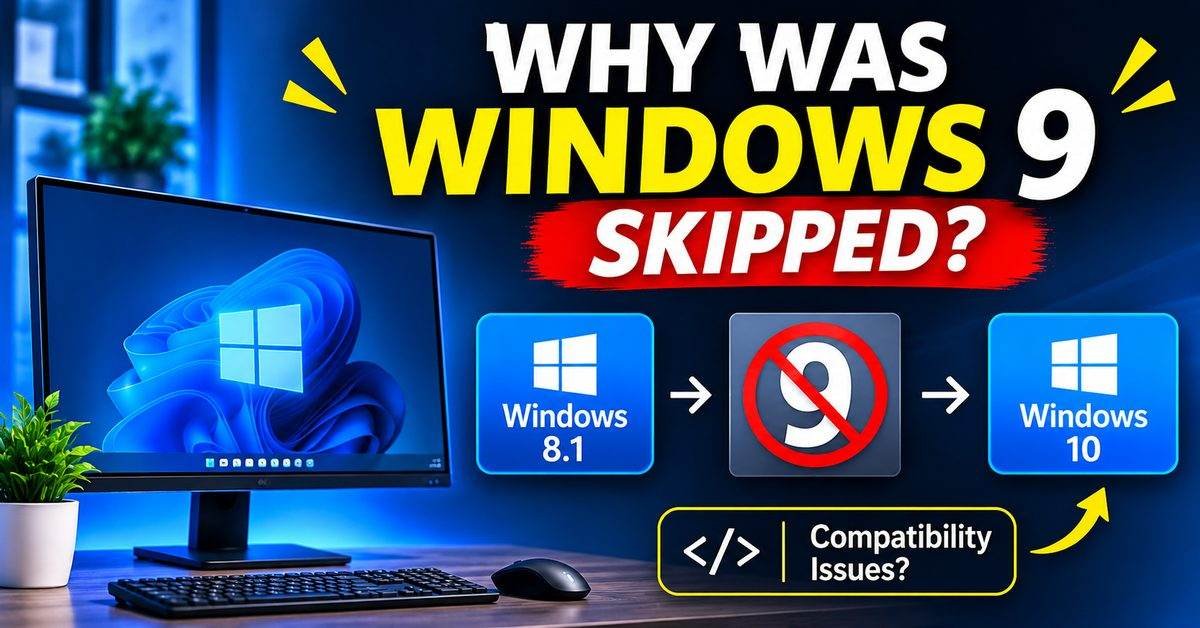
Why Is Windows 9 Skipped? The Real Reason Explained
Have you ever noticed that Microsoft released Windows 7, followed it with Windows 8, and then jumped straight to Windows 10? What happened to Why Is Windows 9 Skipped? Was it canceled, never developed, or skipped for a technical reason?
It is a question that has interested Why Is Windows 9 Skipped, students, and technology enthusiasts for years. The missing number might seem like a simple naming mistake, but it created several interesting discussions about Microsoft’s decisions.
The short answer is that Microsoft chose Why Is Windows 9 Skipped because it wanted to represent a major change in the operating system. However, there are other theories, including concerns about compatibility with older software.
we will explore why Why Is Windows 9 Skipped, what Microsoft said about the decision, and whether Windows 9 ever existed.
ALSO READ: PC Tweaks: 9 Free Ways To Speed Up Your Windows PC
Why Is Windows 9 Skipped?
Microsoft officially announced Windows 10 on September 30, 2014. Instead of following the expected naming sequence, the company moved directly from Windows 8.1 to Windows 10.
The decision surprised many people because Why Is Windows 9 Skipped seemed like the obvious next name.
Microsoft executives explained that the upcoming operating system represented a significant change in the company’s approach. It was designed to work across different types of devices, including traditional computers, tablets, smartphones, and other connected products.
Terry Myerson, Microsoft’s former executive responsible for the Why Is Windows 9 Skipped division, explained that calling the new release Why Is Windows 9 Skipped would not properly represent the scale of the changes.
Microsoft wanted a name that communicated a new direction rather than a small update to Windows 8.
Microsoft Wanted To Show A Major Change
One of the strongest explanations for skipping Why Is Windows 9 Skipped was Microsoft’s desire to present Windows 10 as a major step forward.
Windows 8 introduced a different interface that focused heavily on touchscreens and tablet-style navigation. Although this approach worked for some users, many desktop and laptop owners preferred the traditional Windows experience.
Windows 10 aimed to bring these experiences together.
Some of its important changes included:
- Start Menu comeback: Microsoft brought back a more familiar Start Menu experience.
- Better desktop experience: The operating system improved navigation for keyboard and mouse users.
- Improved multitasking: Users could work with multiple windows and virtual desktops.
- Cross-device direction: Microsoft aimed to create a more consistent Windows experience across different devices.
- Updated interface: Windows 10 combined familiar desktop elements with newer design features.
These changes helped Microsoft position Windows 10 as more than another routine update.
Windows 8 Had Created A Branding Problem
Another possible reason was the reputation of Windows 8.
When Windows 8 launched in 2012, Microsoft introduced a redesigned interface with colorful tiles and a strong focus on touchscreen devices.
However, not everyone liked the changes.
Many desktop users found the new Start Screen unfamiliar. People who were comfortable with Windows 7 sometimes struggled to adjust to the different navigation experience.
Businesses also had concerns about changing their existing computer systems.
Windows 8.1 improved several aspects of the experience, but some users still preferred the older design.
By moving directly to Windows 10, Microsoft could create a clearer distinction between its previous operating system and the new one.
The new name also helped communicate that the company had listened to customer feedback and was moving in a different direction.
Could Older Software Have Confused Windows 9 With Windows 95 Or 98?
One of the most popular theories involves software compatibility.
Before Windows 10, Microsoft had already released two operating systems with names beginning with the number nine:
- Windows 95
- Windows 98
Some older software applications used simple methods to identify which Why Is Windows 9 Skipped version was running on a computer.
For example, a program might check whether the operating system name started with the words “Windows 9.”
If Microsoft had introduced Windows 9, outdated software using that type of check might have incorrectly identified it as Windows 95 or Windows 98.
This could potentially have caused compatibility problems.
For developers, maintaining compatibility with older software is important, especially when customers still depend on legacy applications.
However, there is an important detail: Microsoft has never officially confirmed that this compatibility issue was the reason Windows 9 was skipped.
It remains a widely discussed theory rather than an established fact.
Microsoft Wanted A New Identity For Windows
Operating system names are not always based on a simple numerical sequence.
Technology companies sometimes choose names to communicate a new direction, highlight major improvements, or make a product easier to market.
Microsoft had several reasons to introduce a fresh identity with Windows 10.
The company wanted an operating system that could support a broader range of devices and provide a more unified experience.
The new name also helped create excitement around the release.
Rather than presenting the product as a small improvement over Windows 8.1, Microsoft introduced it as an important milestone in Windows development.
This decision showed that product names can be part of a company’s larger marketing and branding strategy.
Was Windows 9 Ever Released?
No, Microsoft never released an official consumer version of Windows 9.
There was no publicly available Windows 9 operating system for regular customers to install or purchase.
The actual release sequence went from Windows 8.1 to Windows 10.
Here is a simple look at the relevant timeline:
| Windows Version | Release Year |
|---|---|
| Windows 7 | 2009 |
| Windows 8 | 2012 |
| Windows 8.1 | 2013 |
| Windows 10 | 2015 |
| Windows 11 | 2021 |
Windows 10 was announced in September 2014 and officially released on July 29, 2015.
Therefore, Windows 9 was not a normal commercial release that users missed. Microsoft simply chose a different name for its next major operating system.
Windows 9 vs Windows 10: What Is The Difference?
Comparing Windows 9 and Windows 10 can be confusing because Windows 9 was never officially released.
There are no official Windows 9 features, editions, system requirements, or release dates to compare.
However, Windows 10 introduced several improvements over Windows 8.1.
| Feature | Windows 9 | Windows 10 |
|---|---|---|
| Official release | Never released | July 29, 2015 |
| Start Menu | No official version | Returned |
| Desktop experience | No official version | Improved |
| Virtual desktops | No official version | Supported |
| Official editions | None | Multiple editions |
| Microsoft support | None | Officially provided |
Windows 10 became an important version of Microsoft’s desktop operating system and introduced changes that influenced later Windows releases.
What Can We Learn From Microsoft Decision?
The decision to skip Windows 9 demonstrates that technology companies do not always follow predictable naming patterns.
A product name can communicate more than its position in a sequence. It can represent a company’s goals, product improvements, and future direction.
There are several lessons from Microsoft’s decision:
- Branding matters: A product name can influence how customers understand a new release.
- Customer feedback matters: Companies need to understand what users like and dislike.
- Compatibility is important: Developers must consider how software works with older systems.
- Innovation needs clear communication: Major changes should be explained in a way customers can understand.
For students, freelancers, professionals, and business owners, this is a useful example of how technology development and marketing decisions work together.
Conclusion
So, why is Windows 9 skipped? The answer comes down to Microsoft decision to introduce Windows 10 as a major new direction for its operating system.
The company wanted to move beyond the Windows 8 experience, improve usability across different devices, and give its next release a stronger identity. Although the Windows 95 and Windows 98 compatibility theory remains popular, it has never been officially confirmed.
Ultimately, Windows 9 was never released, and Windows 10 became the next major version after Windows 8.1.
It is a reminder that technology companies do not always follow traditional naming sequences. Sometimes, a name is chosen to represent a bigger vision rather than simply the next number.
FAQs
Why did Microsoft skip Windows 9?
Microsoft skipped Windows 9 because it wanted its next operating system to represent a major change rather than a small numerical upgrade. The company selected Windows 10 to communicate its new direction.
Did Windows 9 ever exist?
No. Microsoft never officially released Windows 9 as a consumer operating system. Windows 8.1 was followed by Windows 10.
Was Windows 9 skipped because of Windows 95 and Windows 98?
That is a popular theory. Some older applications used basic version-checking methods that might have confused Windows 9 with Windows 95 or 98. However, Microsoft never confirmed this as the official reason.
When was Windows 10 released?
Microsoft officially released Windows 10 on July 29, 2015. It was announced on September 30, 2014.
What came after Windows 8.1?
Windows 10 came after Windows 8.1. Microsoft chose not to use the Windows 9 name.
ALSO READ: GDTJ45 Builder Software Code Development: A Complete Guide