
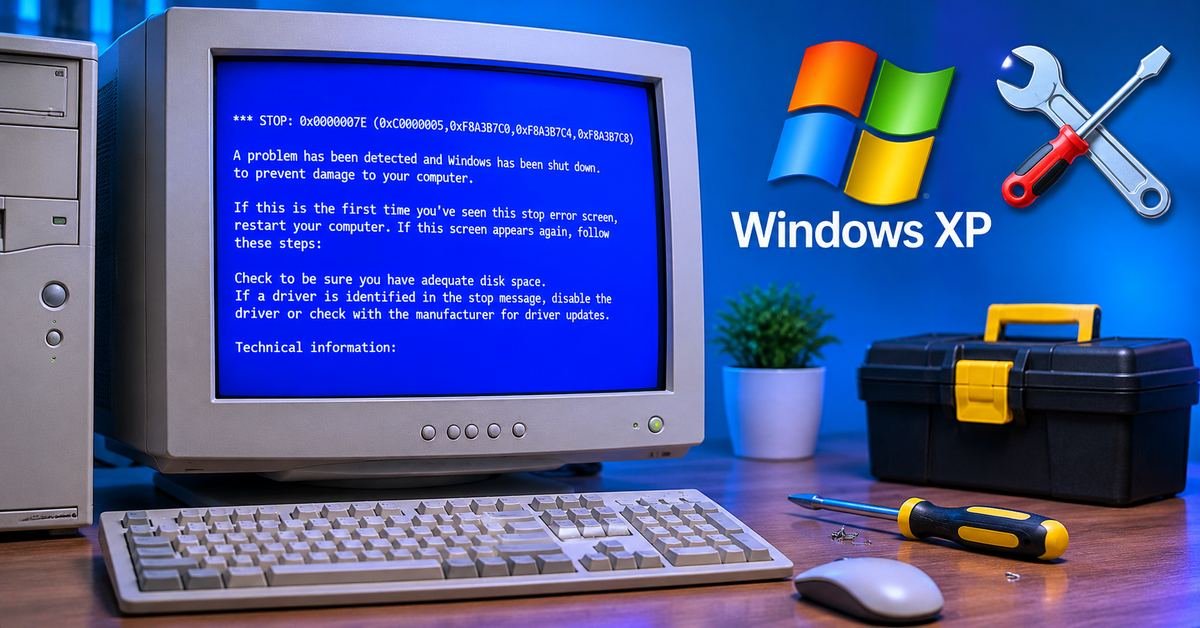
Blue Screen Of Death Fix Windows XP: 8 Easy Solutions
Have you ever turned on your old computer, only to see a blue screen with a confusing error message instead of the Blue Screen Of Death Fix Windows XP? This problem is commonly known as the Blue Screen of Death (BSOD). It can prevent you from accessing your files, opening applications, or even starting Windows XP.
The good news is that many Blue Screen Of Death Fix Windows XP can be diagnosed and sometimes fixed without reinstalling the operating system.
If you are looking for a reliable blue screen of death fix Windows XP, this guide explains the most common causes and eight practical solutions. Whether you are a student, office worker, freelancer, or someone using an older computer for personal tasks, these steps can help you troubleshoot the problem.
ALSO READ: Why Is Windows 9 Skipped? The Real Reason Explained
What Is The Blue Screen Of Death In Windows XP?
The Blue Screen of Death is a critical system error that appears when Blue Screen Of Death Fix Windows XP encounters a problem it cannot safely handle. Instead of continuing to operate, Windows displays a blue screen and stops running.
In Blue Screen Of Death Fix Windows XP usually contains a STOP error code, technical information, and sometimes the name of a file or driver responsible for the crash.
Some common Blue Screen Of Death Fix Windows XP errors include:
- STOP 0x0000007B: INACCESSIBLE_BOOT_DEVICE.
- STOP 0x000000ED: UNMOUNTABLE_BOOT_VOLUME.
- STOP 0x0000000A: IRQL_NOT_LESS_OR_EQUAL.
- STOP 0x00000050: PAGE_FAULT_IN_NONPAGED_AREA.
Each error can point toward a different problem. Therefore, identifying the error code is an important first step.
Common Causes Of Windows XP Blue Screen Errors
Before trying different solutions, it helps to understand what might be causing the problem.
Here are some common reasons:
Corrupted drivers: An outdated or incompatible driver can cause Blue Screen Of Death Fix Windows XP to crash.
Hard drive problems: Damaged sectors or file system errors can prevent Blue Screen Of Death Fix Windows XP from starting.
Faulty RAM: Defective memory can create unexpected system errors.
Hardware changes: Installing a new graphics card, hard drive, or motherboard can cause compatibility problems.
Corrupted system files: Important Blue Screen Of Death Fix Windows XP may become damaged or missing.
Virus infections: Certain malware infections can damage boot-related files.
Incorrect BIOS settings: Changes to disk controller settings can prevent Blue Screen Of Death Fix Windows XP from accessing the system drive.
Understanding the possible cause makes troubleshooting easier and helps you avoid unnecessary changes.
8 Effective Blue Screen Of Death Fix Windows XP Solutions
Try the following methods one at a time. Start with the simplest solutions before moving to advanced recovery options.
Restart Your Computer and Disconnect External Devices
Sometimes, a temporary hardware conflict can cause a blue screen.
Start with a basic restart. If the computer continues showing the same error, disconnect unnecessary external devices.
Follow these steps:
Turn off your computer.
Disconnect USB drives, printers, scanners, and other unnecessary devices.
Keep only the essential keyboard and mouse connected.
Turn the computer back on.
Check whether Blue Screen Of Death Fix Windows XP starts normally.
If Windows loads successfully, reconnect your devices one at a time. This can help identify the device causing the problem.
Start Windows XP in Safe Mode
Safe Mode starts Blue Screen Of Death Fix Windows XP with a limited set of drivers and services. It can help you identify whether a recently installed driver or program is responsible for the crash.
To enter Safe Mode:
Restart your computer.
Press the F8 key repeatedly Blue Screen Of Death Fix Windows XP begins loading.
Wait for the Windows Advanced Options Menu.
Select Safe Mode.
Press Enter.
If Blue Screen Of Death Fix Windows XP in Safe Mode, consider uninstalling recently installed programs or removing problematic drivers.
You can also use Device Manager to check for hardware devices displaying a warning symbol.
If Safe Mode does not work, continue with the next method.
Use Last Known Good Configuration
If your blue screen started after installing a new driver or changing a system setting, Last Known Good Configuration may help.
This Blue Screen Of Death Fix Windows XP attempts to restore the last successful system configuration.
Here is how to use it:
Restart your computer.
Press F8 repeatedly during startup.
Open the Blue Screen Of Death Fix Windows XP Advanced Options Menu.
Select Last Known Good Configuration (your most recent settings that worked).
Press Enter.
Blue Screen Of Death Fix Windows XP will attempt to start using the previously successful configuration.
This method is particularly useful when a recent driver or configuration change prevents Blue Screen Of Death Fix Windows XP from starting.
Check Your Hard Drive for Errors
Hard drive problems are another possible reason for Blue Screen Of Death Fix Windows XP errors.
For example, the STOP 0x000000ED error, also called UNMOUNTABLE_BOOT_VOLUME, can indicate file system damage or problems accessing the boot drive.
If Blue Screen Of Death Fix Windows XP, open Command Prompt and enter:
chkdsk C: /fPress Enter and follow any instructions.
If Windows cannot start, you may Blue Screen Of Death Fix Windows XP CD to access the Recovery Console.
The basic process is:
Insert your Windows XP installation CD.
Restart the computer and boot from the CD.
At the Welcome to Setup screen, press R.
Select your Windows installation.
Enter the Administrator password if requested.
Type the following command:
chkdsk C: /rPress Enter and allow the process to finish.
Type exit to restart.
Important: Disk repair operations can take time and may put additional stress on a failing drive. If your data is important and the drive is making unusual noises or showing signs of failure, consider professional data recovery before running repair commands. Back up important files whenever possible.
Remove Recently Installed Drivers
Drivers allow Blue Screen Of Death Fix Windows XP to communicate with hardware such as graphics cards, sound cards, and network adapters.
An incompatible driver can cause repeated system crashes.
If you can access Safe Mode, follow these steps:
Open the Start menu.
Right-click My Computer.
Select Properties.
Open the Hardware tab.
Select Device Manager.
Find the recently updated or problematic device.
Open its Properties and review the available driver options.
If available, use Roll Back Driver. Otherwise, uninstall the problematic device driver and obtain a compatible Windows XP driver from the hardware manufacturer’s trusted support resources.
Avoid installing drivers designed for newer Windows versions.
Check Your Computer’s RAM
Faulty RAM can cause random blue screens, freezing, and unexpected restarts.
If you recently installed additional memory, try removing the new module and testing the computer with the original memory configuration.
For a basic hardware check:
- Turn off the computer and unplug the power cable.
- Follow proper anti-static precautions.
- Check that memory modules are securely installed.
- Test compatible memory modules individually if possible.
- Use a trusted memory diagnostic tool compatible with your hardware.
If the computer works with one memory module but crashes with another, the faulty module may be responsible.
If you are unfamiliar with computer hardware, ask a technician to perform this test.
Repair Windows XP Using the Installation CD
If important Windows system files are corrupted, repairing the installation may help.
You can use the Windows XP installation CD to perform an in-place repair installation.
The general process involves:
Insert the original Windows XP installation CD.
Restart your computer and boot from the CD.
Press Enter when prompted to set up Windows.
Accept the license agreement.
Select your existing Windows XP installation.
Choose the Repair option when it is offered.
Make sure you select the correct repair option rather than deleting or formatting the partition.
A repair installation may preserve personal files and installed programs, but it is not a substitute for a backup. You may also need to reinstall updates and drivers afterward.
Check BIOS Settings and Recent Hardware Changes
Incorrect BIOS settings or recently changed hardware can prevent Windows XP from accessing the hard drive.
For example, STOP 0x0000007B (INACCESSIBLE_BOOT_DEVICE) can occur when Windows cannot communicate properly with the boot drive.
Try these checks:
- Remove recently installed hardware if the problem started immediately afterward.
- Check that the hard drive is detected in BIOS.
- Review any recent BIOS changes.
- Restore the previous working storage controller settings if they were changed.
- Check hard drive cables and connections.
Do not randomly change BIOS settings. An incorrect storage controller configuration can make the startup problem worse.
If the error appeared after replacing the motherboard, the new hardware may require a compatible Windows XP storage controller driver.
Microsoft’s archived troubleshooting guidance provides additional information about this particular STOP error.
How To Identify The Right Windows XP Blue Screen Fix
Not every blue screen requires the same solution. The STOP code can help narrow down the problem.
| Error code | Possible issue | Suggested starting point |
|---|---|---|
| 0x0000007B | Boot device access problem | Check drivers and BIOS |
| 0x000000ED | Boot volume problem | Check disk and drive cables |
| 0x0000000A | Driver or hardware issue | Investigate recent driver changes |
| 0x00000050 | Memory or driver issue | Test RAM and drivers |
These are starting points, not guaranteed diagnoses. A technician may need to inspect the hardware or crash information to identify the exact cause.
A Practical Example: Fixing A Windows XP Startup Problem
Imagine you have an older desktop computer that worked perfectly yesterday. Today, it displays a blue screen immediately after the Windows XP logo appears.
You notice the error code is STOP 0x0000007B.
Instead of immediately reinstalling Windows, you can:
Disconnect unnecessary USB devices.
Check whether the hard drive appears in BIOS.
Think about any recent hardware or BIOS changes.
Try Last Known Good Configuration.
Check the drive and its connections.
Investigate whether the correct storage controller driver is installed.
This approach saves time and reduces the risk of accidentally losing important files.
A useful troubleshooting habit is to spend the first few minutes recording the error code and recent changes. Then test one solution at a time and write down the result. This makes it easier to identify what actually fixes the problem.
How To Prevent Windows XP Blue Screen Errors
Although Windows XP is an old operating system, you can still take steps to reduce hardware and software problems.
- Keep important files backed up on an external drive.
- Avoid installing unknown software.
- Use hardware drivers specifically designed for Windows XP.
- Check hard drive health regularly.
- Keep the computer clean and properly ventilated.
- Avoid unnecessary BIOS changes.
- Test replacement hardware before making permanent changes.
Security reminder: Microsoft ended Windows XP support on April 8, 2014. It no longer receives regular security updates. Avoid using it for sensitive online activities, banking, or business data. If possible, move to a supported operating system or keep the XP computer isolated from the internet.
Conclusion
Dealing with a Windows XP blue screen can be frustrating, especially when you cannot access your desktop or important files. However, you do not always need to reinstall the operating system to solve the problem.
The best blue screen of death fix Windows XP depends on the error code and the underlying cause. Start with simple methods such as disconnecting external devices, entering Safe Mode, and using Last Known Good Configuration. If those methods do not work, investigate your drivers, RAM, hard drive, and Windows installation.
Most importantly, avoid formatting your hard drive before protecting your important data. Take your time, follow the troubleshooting steps carefully, and consider professional assistance when hardware failure is suspected.
With the right approach, you can identify the cause of the blue screen and determine whether your old Windows XP computer can be repaired.
FAQs
How do I fix the Blue Screen of Death in Windows XP?
Start by restarting your computer and disconnecting unnecessary devices. Then try Safe Mode, Last Known Good Configuration, and hard drive diagnostics. The correct solution depends on the STOP error code.
Why does Windows XP keep showing a blue screen?
Windows XP may repeatedly show a blue screen because of damaged system files, faulty RAM, incompatible drivers, hard drive problems, or incorrect hardware settings.
Can I fix a Windows XP blue screen without a CD?
Yes, in some situations. You can try Safe Mode, Last Known Good Configuration, and hardware troubleshooting without an installation CD. However, advanced recovery options may require Windows XP installation media.
What does STOP 0x0000007B mean in Windows XP?
STOP 0x0000007B means INACCESSIBLE_BOOT_DEVICE. It indicates that Windows cannot properly access the system partition during startup. Possible causes include incompatible storage drivers, hardware changes, and file system problems.
Does reinstalling Windows XP fix blue screen errors?
Reinstalling Windows XP may resolve software-related problems, but it will not necessarily fix faulty RAM, a damaged hard drive, or other hardware failures. Always back up important files before reinstalling.
Is Windows XP still safe to use?
Windows XP is no longer supported by Microsoft. It does not receive regular security updates, making it risky for internet-connected activities. Using a supported operating system is the safer option.
ALSO READ: PC Tweaks: 9 Free Ways To Speed Up Your Windows PC
Pingback: Setup Disk For Windows XP: How To Create And Use It
Pingback: Game Software For Windows XP: Best Classic Games