
Dental Practice Management Software Needs: 9 Must Have Features
It is a Monday morning at a Dental Practice Management Software Needs. The phone keeps ringing. Two patients walk in early. Another cannot find her paperwork, and the dentist is searching for last month’s notes. By lunchtime, the whole team is tired and the schedule is already behind.
This is rarely a people problem. It is usually a systems problem. The Dental Practice Management Software Needs keeps appointments, patient files, billing, and reminders in one place, so nothing gets lost between the front desk and the treatment room.
But one tool does not fit every clinic. A solo dentist needs different things from a five-chair practice. In this guide, you will see what to look for, how to save time once you start, and how to choose without wasting money.
Whether you are a Dental Practice Management Software Needs, a working dentist, a freelance consultant, or a clinic owner, you will find something useful here.
ALSO READ: Software HCS 411GITS Updated: What It Is And Is It Safe?
What Is Dental Practice Management Software Needs?
Dental Practice Management Software Needs is a program that runs the business side of a clinic. It handles appointments, patient records, treatment plans, invoices, insurance claims, and reports.
Some versions are installed on one computer Dental Practice Management Software Needs. Many newer ones are cloud-based, which means you log in from any device with internet. The provider usually takes care of updates and backups.
Who Gets Value From It?
- Clinic owners get clear numbers on income and costs.
- Dentists and hygienists see full patient history before the patient sits down.
- Front desk staff manage bookings and payments faster.
- Dental students and new graduates learn the tools they will meet in real jobs.
- Freelance and visiting dentists adapt quickly when they move between clinics.
Why Clinics Need It Today
Paper files and spreadsheets work well until they don’t. A missing page, a double booking, or a forgotten follow-up costs money and patient trust. Patients also expect more now. They want quick bookings, clear bills, and reminders on their phones.
Take Dr. Hina, who opened a two-chair clinic last year. She kept appointments in a notebook and bills in Excel. Every evening she spent close to an hour matching the two. After she moved to Dental Practice Management Software Needs, that job shrank to a quick look at a daily report. She got her evenings back.
There is no magic here. Information is typed once and then used everywhere. Fewer repeated steps mean fewer mistakes and less stress.
9 Must Have Features
Not every feature matters equally. These nine are the ones most clinics use every day.
Easy Appointment Scheduling
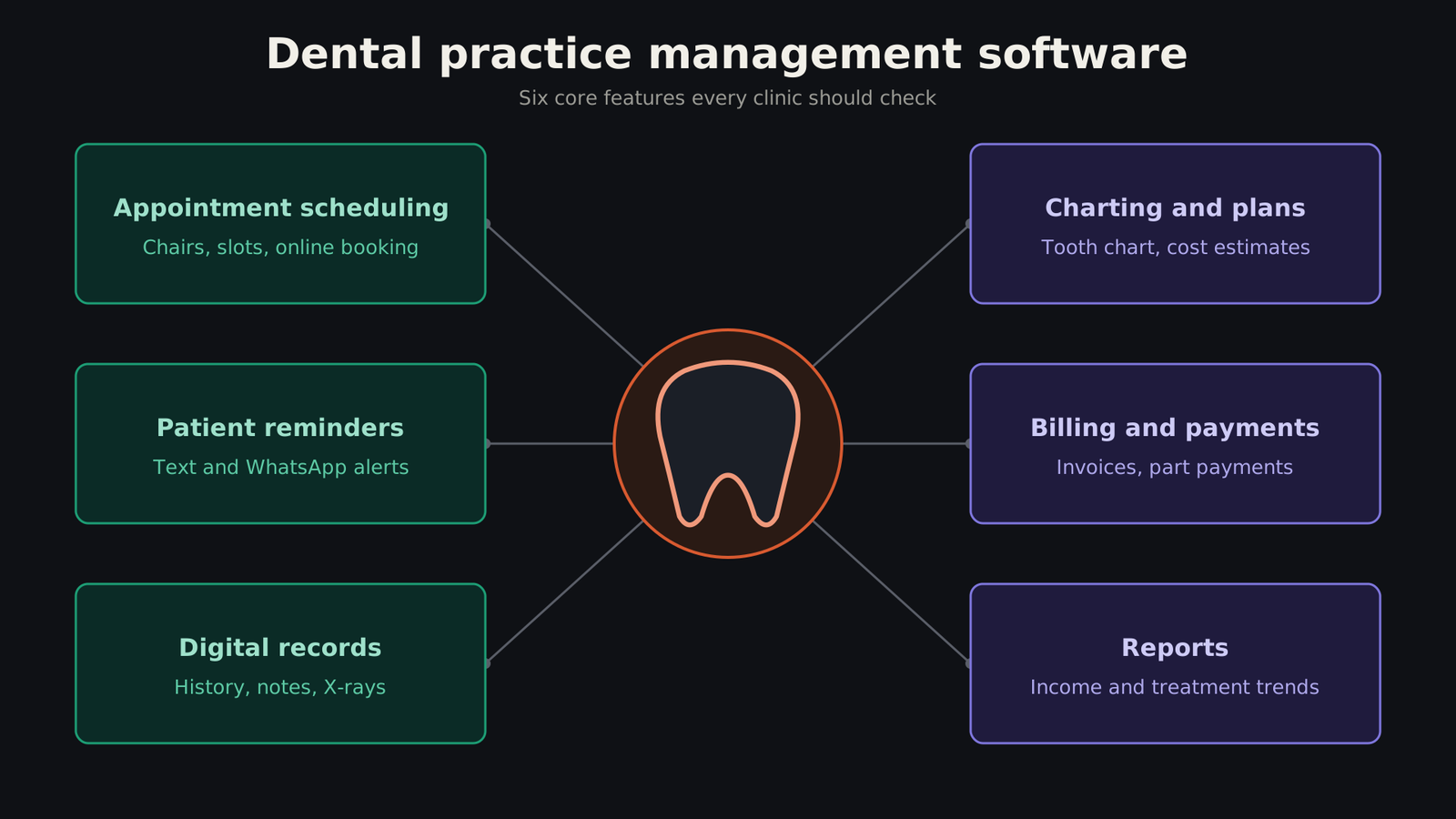
A good calendar shows every chair, every dentist, and how long each procedure takes. Look for drag-and-drop booking, colour codes, and warnings about overlaps. The best dental appointment scheduling software also lets patients request a slot online.
Quick tip: give root canals and extractions longer slots than check-ups. This one habit cuts waiting-room delays more than most people expect.
Automatic Patient Reminders
Missed appointments waste chair time and income. A text or WhatsApp message sent a day before the visit helps patients remember. Choose a system with automated Dental Practice Management Software Needs reminders for follow-ups too, such as six-month cleanings.
Digital Patient Records
Electronic Dental Practice Management Software Needs should hold medical history, allergies, treatment notes, X-rays, and photos. You should be able to find any patient by name or phone number in seconds. Note templates for common procedures save typing and keep records consistent.
Charting and Treatment Planning
A visual tooth chart lets the dentist mark problems and planned work. The software should then turn that plan into a cost estimate the patient can read and approve. Patients accept treatment more easily when they can see what is needed and what it costs.
Simple Billing and Payments
Dental billing software should create invoices, record part payments, and print receipts. Many patients pay in stages for braces or implants, so tracking balances matters. If you work with insurance, check that claims are supported in your country.
Reports That Answer Real Questions
How much did the clinic earn this month? Which treatment brings in the most income? How many patients came back? Good reports answer these in a few clicks. You plan with facts, not guesses.
Inventory Tracking
Gloves, anaesthetic, and filling materials always seem to run out at the worst moment. Basic stock tracking with low-stock alerts keeps supplies ready and avoids last-minute buying.
Data Security and Backups
Patient information is private. Look for password protection, user roles so staff see only what they need, and automatic backups. Depending on where you work, rules like HIPAA in the United States or local data protection laws may apply. Ask the provider plainly how they protect your data.
Training and Support
Even the best Dental Practice Management Software Needs fails if your team cannot use it. Ask about onboarding, training materials, support hours, and whether help is available in your language.
Signs You Have Outgrown Your Current System
Not sure if it is time to switch? Check this list:
- Double bookings happen more than once a month.
- Staff keep private notebooks “just in case.”
- Finding an old patient file takes minutes, not seconds.
- Working out last week’s income takes hours of counting.
- Patients complain about waiting or unclear bills.
If two or more sound familiar, it is time to look at Dental Practice Management Software Needs seriously.
Time Management Techniques That Work
Buying Dental Practice Management Software Needs is only half the job. Using it well is the other half. These habits help you get more from it.
Batch similar tasks. Do all billing at 4 pm instead of between patients. Switching tasks all day drains energy.
Block your day. Keep mornings for complex procedures and afternoons for check-ups and admin. Set your calendar to match.
Use the two-minute rule. If a task takes under two minutes, such as updating a note, do it right away. Small jobs pile up fast.
Hold a ten-minute daily review. Before closing, check tomorrow’s schedule, unpaid invoices, and low stock.
Automate what repeats. Reminders, recall notices, and birthday messages should run on their own.
Real Life Example: The Student Who Fixed Saturday Mornings
Ahmed is a final-year Dental Practice Management Software Needs who helps at his uncle’s clinic on weekends. He noticed the front desk spent every Saturday morning phoning patients to confirm visits. He suggested turning on automatic reminders and set up a Friday afternoon check of next week’s bookings. Within a month, the confirmation calls stopped and the clinic had fewer empty slots. The setup took him about two hours.
It is a small win, but it shows how a student or newcomer can add real value just by spotting repeated work.
Real Life Example: The Owner Who Stopped Guessing
Dr. Bilal runs a three-chair clinic. He used to wait until month-end to learn whether the Dental Practice Management Software Needs was making money. Once his reports were set up, he checked income every Friday. In a few weeks he noticed that late-afternoon slots were often empty. He moved his cleaning appointments there, and the schedule filled out without any extra advertising.
Tips For Freelancers And Visiting Dentists
If you work across several clinics, keep a short checklist for each one: logins, how to book, and where notes go. Spend the first fifteen minutes of a new visit learning the layout. Where you have a choice, favour clinics that use simple, well-known systems. You will lose less time and make fewer errors.
How To Choose The Right Software
Follow these steps in order.
List your needs. Write down the five tasks that take the most time each day.
Set a budget. Include setup, training, and monthly fees, not just the advertised price.
Ask for demos. Test real situations, like booking a patient who has an unpaid balance.
Check data transfer. Ask how your old records will move over, and whether you can export your data if you leave.
Involve your team. The front desk will use it most, so their opinion counts.
Run a trial. Test for at least two weeks before you commit.
When you compare Dental Practice Management Software Needs side by side, a simple scorecard helps. Rate each option from one to five on scheduling, billing, records, support, and price. The numbers make the decision clearer.
Questions To Ask Every Provider
- What happens to my data if I stop paying?
- How often are backups made?
- Is training included?
- Can it work on a phone or tablet?
- Are there extra charges for more users?
Common Mistakes To Avoid
Buying too much. A solo practice rarely needs features built for large chains.
Skipping training. Staff who feel lost will go back to paper.
Ignoring backups. Confirm they work before you need them.
Rushing the switch. Moving everything in one weekend invites errors.
The best dental practice management software is the one your team will actually use every day.
A Simple Four Week Plan To Get Started
Week one: Choose your tool, then enter clinic details, services, and prices.
Week two: Import patient records and train your staff.
Week three: Run the new system alongside the old one to catch gaps.
Week four: Switch fully and fix any problems you found.
Roll out your new dental practice management software in small steps instead of all at once. Staff stay calmer, and mistakes are easier to catch.
Conclusion
Strong clinics do not run on luck. They run on clear schedules, tidy records, accurate billing, and steady follow-up. The right dental practice management software supports all of this, and the nine features above give you a practical checklist.
Start small. Write down your five most time-consuming tasks, then check which ones a tool could handle. Book two demos this week. Ask your team what slows them down. Their answers will point to the features that matter most.
Whether you run a clinic, work in one, or are about to join one, the goal is the same: spend less time on paperwork and more time with patients. Choosing dental practice management software with care is one of the simplest ways to get there.
FAQs
What is dental practice management software used for?
It handles the daily running of a clinic: appointments, patient records, treatment plans, billing, reminders, and reports. Instead of using notebooks, spreadsheets, and separate apps, your team works from one system.
How much does dental practice management software cost?
Prices vary by country, number of users, and features. Many cloud tools charge a monthly fee per user or per clinic. Always ask for the full cost, including setup, training, and support, before you decide.
Is cloud-based or installed software better?
Cloud-based tools let you work from any device and usually handle updates and backups for you. Installed software can work without internet but depends on your own computer and backup habits. Choose based on your internet reliability and how many locations you work from.
Can a small or solo clinic use it?
Yes. Many tools are built for one or two chairs. Start with scheduling, records, and billing, and add extra features only when you need them.
Is patient data safe in these systems?
It can be, if the provider offers password protection, staff access levels, and regular backups. Ask where data is stored and what laws apply in your area. A good provider answers these questions clearly.
How long does it take to switch from paper or spreadsheets?
Most clinics need two to four weeks to set up, move records, and train staff. Running the old and new systems side by side for a short time lowers the risk of mistakes.
Can students and freelancers benefit from learning it?
Yes. Students who know how these systems work are more useful on day one in a clinic. Freelancers who adapt quickly to different systems save time and impress the clinics they visit.
ALSO READ: Information About Foxtpax Software: Facts Claims And Tips
Pingback: GDTJ45 Builder Software Code Development: A Complete Guide
Pingback: PC Tweaks: 9 Free Ways To Speed Up Your Windows PC